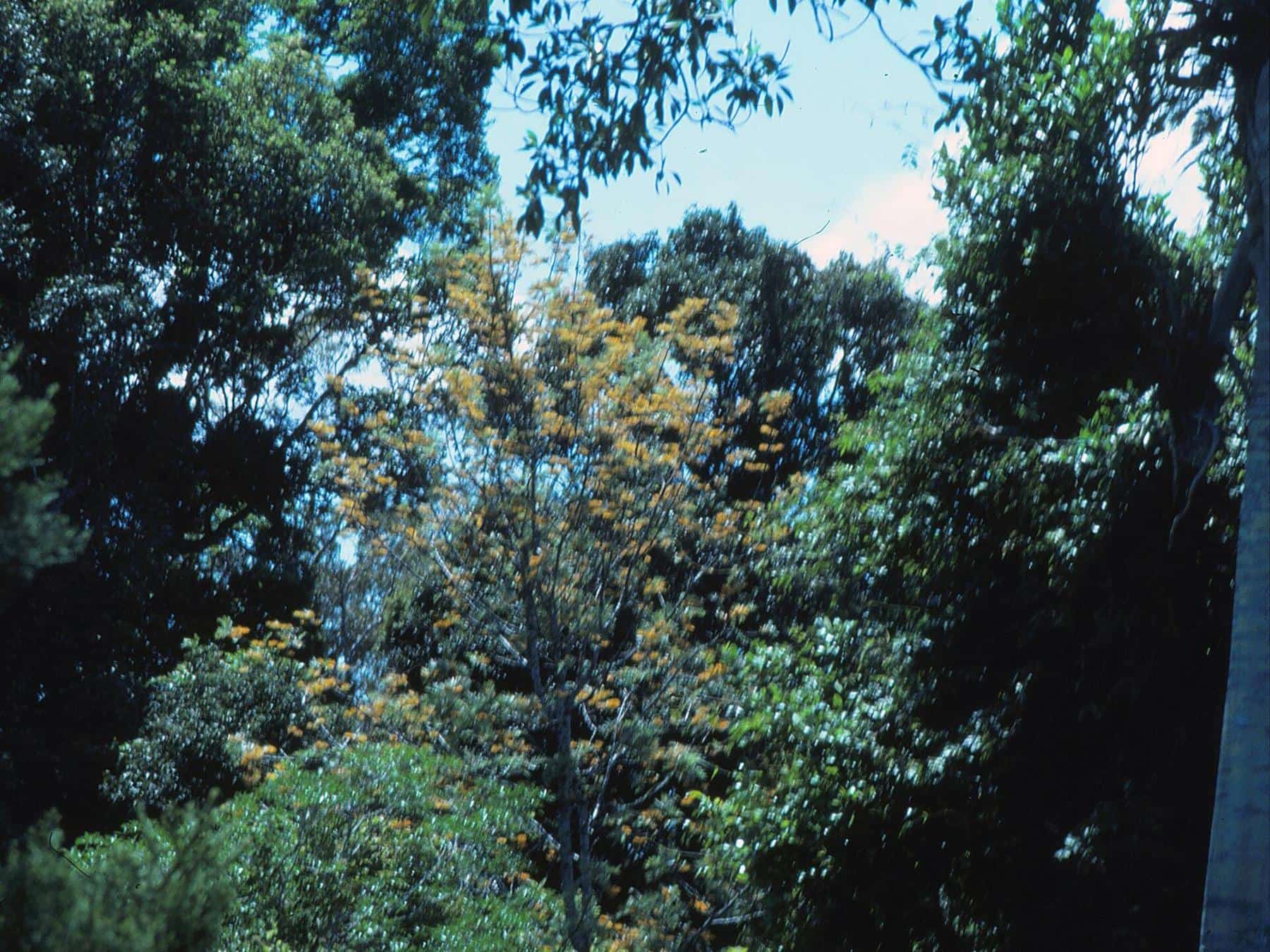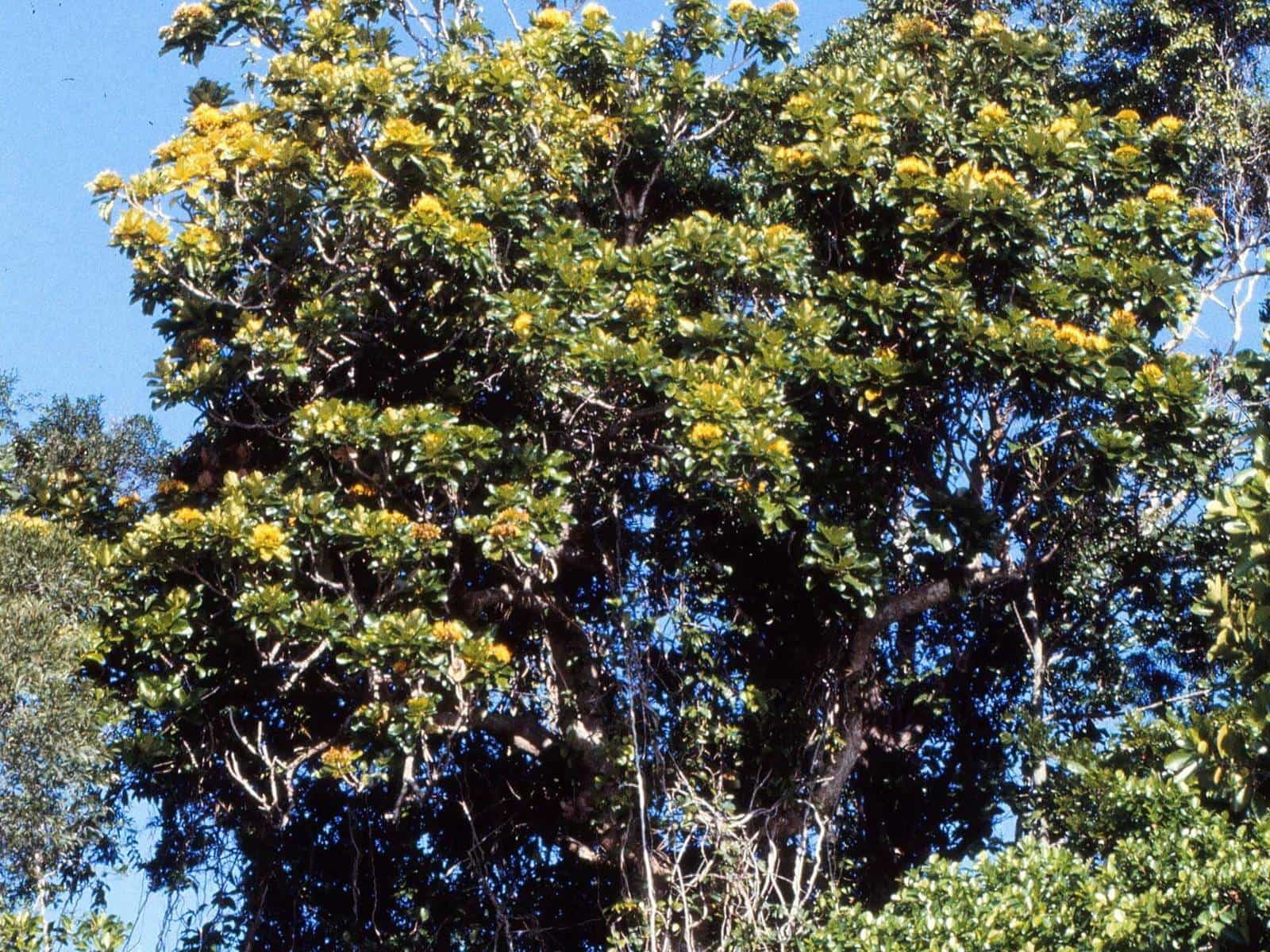
The forests of Mount Glorious are a living history lesson. Walk from the car park at Maiala into the trees and you pass from open eucalypt forest into dense subtropical rainforest, with towering figs, palms, vines and ferns. Look closely and you will find clues to how the forest has changed: a lone giant gum surrounded by rainforest, stumps notched by timber-getters, and plants whose ancestors grew when dinosaurs walked the Earth. QPWS says more than 800 plant species grow in D'Aguilar National Park, some of them rare and threatened. This guide helps you recognise the most striking.
800+
Plant species
In D'Aguilar NP
60 m
Watkins' fig
Maximum height
⅔ more
Rainfall
Range top vs foothills
Why there is rainforest here
The D'Aguilar Range rises from the coastal plain north-west of Brisbane, and its highest parts catch moisture-laden air. On the summits, rainfall is about two-thirds greater than in the foothills. Combined with deep, rich basalt soils, particularly north of Mount Glorious, that extra rain supports moist subtropical rainforest.
Fire matters too. QPWS notes that pockets of subtropical rainforest are mostly restricted to southern slopes that have been protected from fire. Rainforest plants are generally fire-sensitive, so the boundary between rainforest and eucalypt forest often follows the lines that fire has drawn over centuries.
The forest types
A drive or walk through the park passes several distinct forest types:
- Dry eucalypt woodland on the shallow soils of the foothills, dominated by spotted gum and narrow-leaved ironbark, with patches of heath and grass trees.
- Tall wet eucalypt forest at mid altitudes, where grey gum, pink bloodwood and brush box dominate above a thick understorey of ferns, vines and shrubs.
- Subtropical rainforest on the highest, wettest parts of the range, with a closed canopy, strangler figs and a rich mix of species.
- Lowland rainforest in remnant pockets along some valley watercourses.
Plants to look for
Strangler figs
The giants of the Mount Glorious rainforest are strangler figs. Huge strangler figs, Ficus watkinsiana, can be seen emerging through the canopy on the range. Known as Watkins' fig, nipple fig or green-leaved Moreton Bay fig, this species can grow to about 60 metres tall and 2 metres in diameter, with smooth bark and sometimes buttresses.
Strangler figs are hemiepiphytes. A fig seed, dropped by a bird or bat high in a host tree, germinates in the canopy and sends roots down to the ground. Over decades the roots thicken and fuse into a lattice around the host, which may eventually die and rot away, leaving a hollow fig "trunk" of woven roots.
Watkins' fig grows in two separate populations, one in north-east Queensland and one from near Bundaberg to about Lismore, often on basalt soils. Its paired fruit are purplish-brown to black with a nipple-like tip, and they feed birds and flying foxes. Like all figs, it depends on a single species of tiny wasp for pollination, in a partnership known as obligate mutualism.
Sydney blue gum
On the Rainforest circuit, QPWS draws attention to an old Sydney blue gum, a magnificent survivor of the eucalypt forest that once dominated the area. Look for its smooth, pale trunk rising above the rainforest canopy. Eucalypts need light to regenerate, so a giant gum surrounded by rainforest is a sign that the forest around it has changed over the tree's long life.
Cycads
Lepidozamia peroffskyana is a palm-like cycad endemic to south-east Queensland and north-east New South Wales, growing on rainforest margins and in wet eucalypt forest, usually on steep slopes. It can grow to seven metres but usually reaches about four, with a crown of glossy, dark green fronds up to three metres long. Its cones are among the largest of any cycad: female cones can reach 90 centimetres and weigh up to 45 kilograms.
All parts of the plant are toxic to people and livestock, especially the seeds, which have bright red coats. Do not touch or eat them.
Hoop pine and red cedar
Hoop pine and red cedar were the trees that brought timber-getters to the range from the 1840s. QPWS notes that giant red cedar and hoop pine were felled to build houses that still stand in Brisbane today, and that stumps with notches cut for springboard platforms can still be seen in the park. Logging expanded in the 1870s, taking hoop pine, cedar, silky oak and black bean.
Native cypress pines
The Cypress Grove circuit at Maiala passes through a small grove of native cypress pines among large eucalypts and vines, a striking contrast with the rainforest nearby.
Palms, ferns and vines
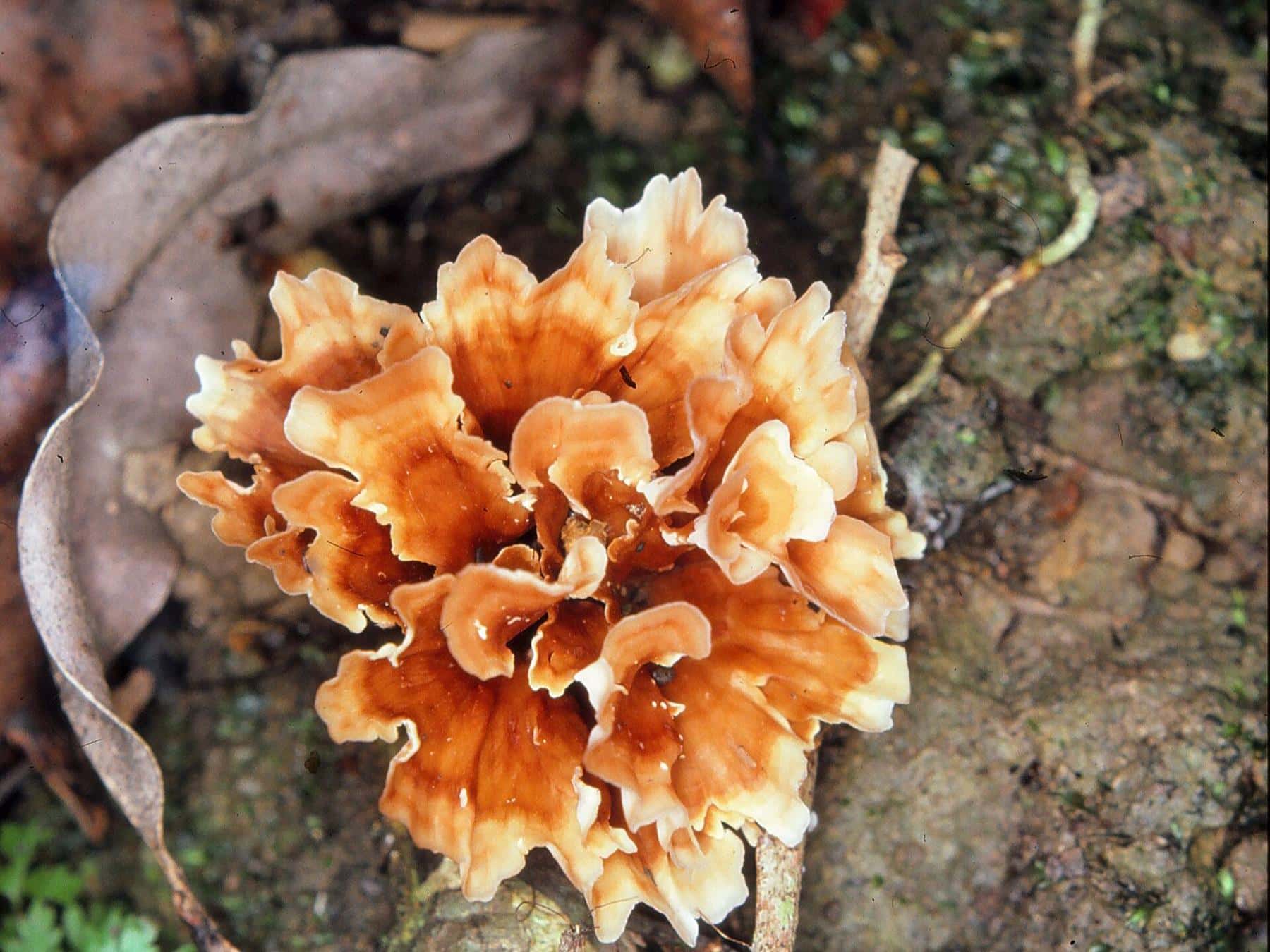
The Rainforest circuit passes palms, ferns, climbing lianas and fungi. The cooler mountain climate is ideal for ferns and mosses. Woody vines climb towards the light, using host trees for support, and some reach the canopy before spreading out.
Rare and threatened plants
QPWS lists several plants of conservation significance in the park:
- Broad-leaved spotted gum (Corymbia henryi), which has a very limited distribution in South East Queensland but grows plentifully in the park.
- Queensland nut or bopple nut (Macadamia integrifolia), the edible macadamia, which grows in the north of the park.
- Maroochy nut or Gympie nut (Macadamia ternifolia), an inedible macadamia that grows on the slopes of Mount Nebo.
- Giant ironwood (Choricarpia subargentea).
- Corchorus cunninghamii, a delicate native shrub.
Both macadamia species are listed as vulnerable. They are a reminder that one of Australia's best-known food plants comes from forests like these.
Reading the rainforest
A few features help you recognise rainforest as you walk:
- A closed canopy that lets in little direct light.
- Buttress roots, flaring from the base of large trees.
- Vines and lianas, from thin wiry climbers to woody ropes.
- Epiphytes, plants that grow on other plants, such as ferns and orchids on branches.
- Leaf litter and fungi on a damp forest floor, where fallen material breaks down quickly.
Seasons in the forest
Rainforest changes subtly through the year. After summer rain, fungi appear on logs and the forest floor, and creeks run full. Fig trees fruit at different times, drawing birds and flying foxes. In the drier months of winter and early spring, tracks are usually firmer, leeches are fewer and walking is often more comfortable.
Plant-spotting checklist
0 of 6 done
Ticks are saved in this browser only.
Frequently asked questions
What kind of rainforest is at Mount Glorious?
Mount Glorious has moist subtropical rainforest, which grows on the highest parts of the D'Aguilar Range where rainfall is much higher than in the foothills, particularly on the rich basalt soils north of the village.
What is a strangler fig?
A strangler fig begins life as a seed that germinates high in a host tree. It sends roots down to the ground and gradually encloses the host. The giant figs at Mount Glorious include Ficus watkinsiana, which can grow to about 60 metres.
Why are there eucalypts in the rainforest?
Some giant eucalypts, such as the old Sydney blue gum on the Rainforest circuit, are survivors of the eucalypt forest that once dominated the area before rainforest expanded.
How many plant species are in D'Aguilar National Park?
QPWS says more than 800 plant species are found in the park's forests, some of them rare and threatened.
Can I pick plants or fungi?
No. Everything in national parks is protected. Do not take or interfere with plants, fungi or fallen timber.
Are any rainforest plants dangerous?
Some are. Cycad seeds are toxic to people and animals, and stinging trees grow in some Queensland rainforests. Admire plants without touching or tasting them.
Sources and further reading
Facts on this page were checked against these primary and official sources. Conditions change — confirm before you travel or buy.
- D'Aguilar National Park — Wikipedia
- D'Aguilar National Park – Nature, culture and history — Queensland Parks and Wildlife Service
- Rainforest circuit — Queensland Parks and Wildlife Service
- Ficus watkinsiana — Wikipedia
- Lepidozamia peroffskyana — Wikipedia
- D'Aguilar Range — Wikipedia