For birdwatchers in Brisbane, Mount Glorious is a short drive to a different world. Within an hour of the city, the forest changes from dry eucalypt woodland to moist subtropical rainforest, and with it come birds you will rarely see in the suburbs. More than 240 bird species have been recorded across D'Aguilar National Park, and QPWS describes the park as offering excellent birdwatching opportunities. This guide introduces the rainforest birds to look and listen for around Mount Glorious, with tips on where and when to go.
240+
Bird species
Recorded in the park
Dawn
Best time
Peak activity and calling
Maiala
Best start
Rainforest circuit
Rainforest specialists
These are the birds many visitors most hope to see. All are listed among the species recorded in D'Aguilar National Park.
Noisy pitta
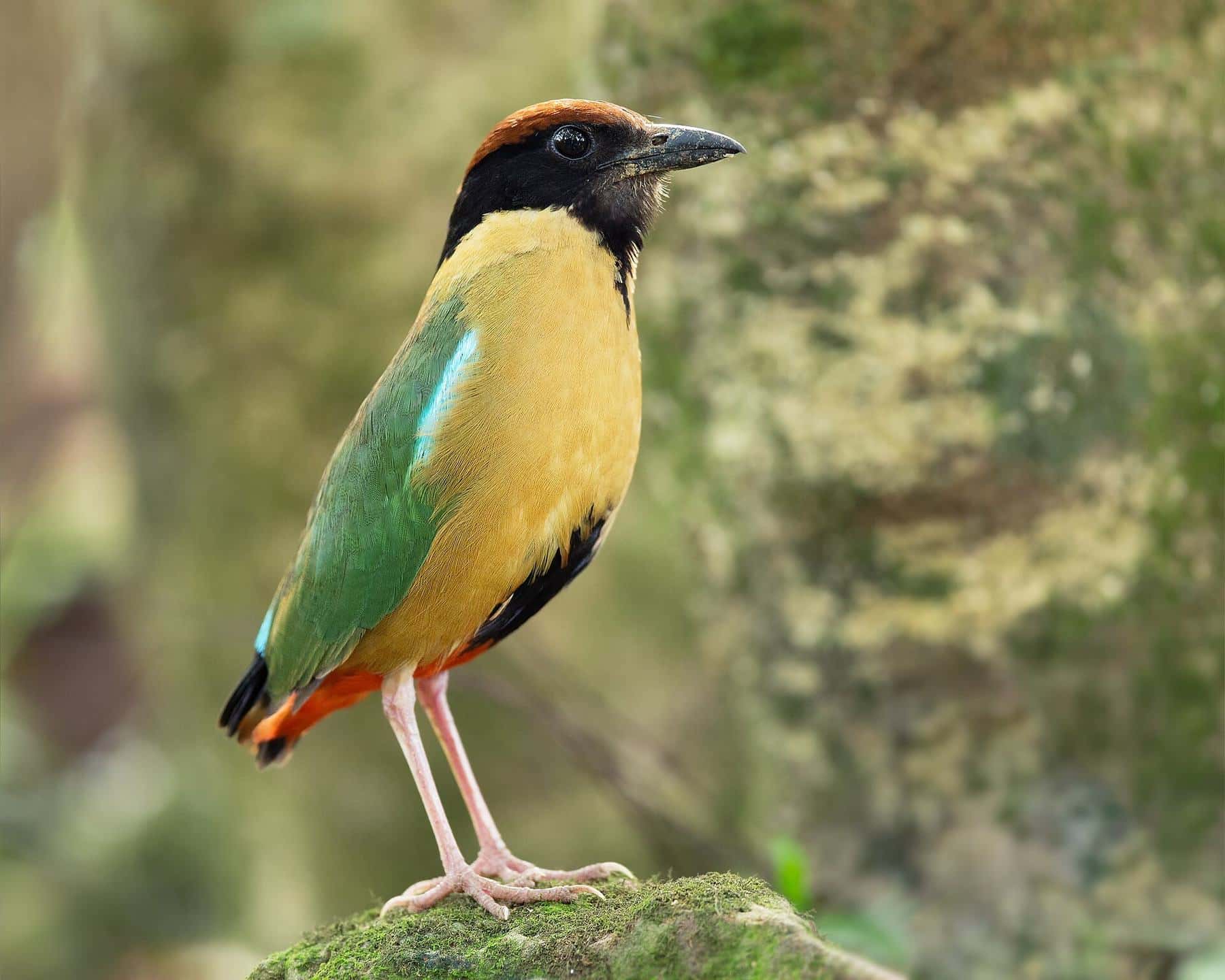
The noisy pitta is one of the most colourful birds in the forest, but also one of the hardest to see. About 19 to 21 centimetres long, it has a black head with a chestnut crown, green back and wings with a turquoise edge, a lemon-yellow breast and orange-red under the tail.
As the name suggests, you usually hear it first. Its call is usually repeated twice and consists of three ascending notes, sometimes rendered as "walk-to-work". Pittas call most often in the morning, with a second peak around midday and another at dusk, and they call most in the breeding season, with almost no calling between March and August.
Look for them on the forest floor, where they rummage through leaf litter for insects, snails and other invertebrates, bobbing their heads and flicking their tails. Pittas are famous for cracking snail shells on a favourite stone, called an anvil; if you find a rock surrounded by broken shells, a pitta may be nearby.
Regent bowerbird
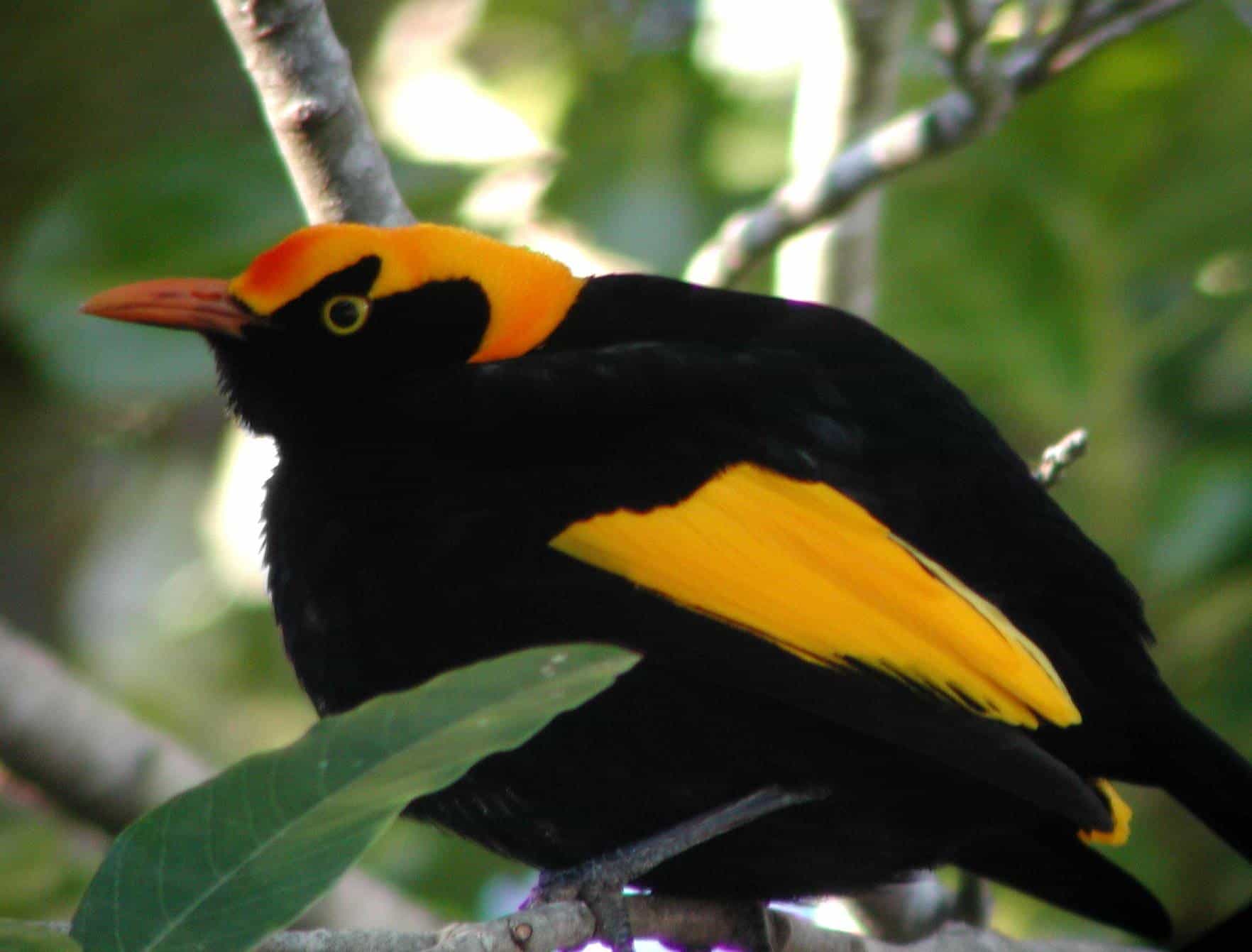
The male regent bowerbird is spectacular: black with a golden orange-yellow crown, mantle and wing feathers, with a yellow bill and eye. Females are brown with whitish or fawn markings. The species is endemic to the rainforests and rainforest margins of eastern Australia, from central Queensland to New South Wales. The bird was named for a prince regent of the United Kingdom.
Male regent bowerbirds build an avenue-style bower of two walls of sticks, decorated with shells, seeds, leaves and berries. They are known to mix a greyish-blue or pea-green "saliva paint" and sometimes use wads of leaves as paintbrushes to decorate their bowers, one of the few known examples of tool use by birds.
Satin bowerbird
The satin bowerbird is also recorded in the park. Adult males are glossy blue-black with violet eyes, while females and young males are green. Male satin bowerbirds famously collect blue objects to decorate their bowers.
Paradise riflebird
The paradise riflebird is a bird of paradise, one of four riflebird species, found in the subtropical and temperate rainforests of eastern Australia. Males are black with iridescent blue-green on the crown, throat and central tail, and are thought to have specialised "super black" feathers that make their colours appear more intense. Females are grey-brown and white. During the breeding season, males perform displays for females, moving rapidly from side to side with the head tilted back. The name riflebird comes from the resemblance of the male's velvety black plumage to the uniform of the British Army's Rifle Brigade.
Southern logrunner
The southern logrunner is a small ground bird that scratches through leaf litter on the rainforest floor. It is listed among the species recorded in the park, and the quiet sections of the Maiala tracks are good places to watch for it.
Other birds to look for
QPWS notes that bowerbirds, wompoo fruit-doves, bell miners and yellow-tailed black-cockatoos can often be seen or heard throughout the forest. Other species recorded in the park include:
- Australian brush-turkey. You will almost certainly see these large black birds with bare red heads scratching up huge mounds of leaf litter, which males build to incubate eggs.
- Laughing kookaburra and pied currawong, familiar and vocal.
- Marbled frogmouth, a nocturnal bird of the rainforest.
- Black-breasted button-quail, a threatened ground bird.
- Red goshawk, a rare bird of prey.
- White-bellied sea eagle, more likely over the water at Lake Wivenhoe.
- Powerful owl, which QPWS lists as vulnerable, hunting possums at night.
The green catbird, a bowerbird of subtropical forests along the east coast, is named for its call, which sounds like a cat meowing and has been mistaken for a crying child. It is a classic sound of rainforests in south-east Queensland, and worth listening for.
Where to go
- Maiala. The Rainforest circuit and the Greenes Falls track pass through the best rainforest near the village. Walk slowly and stop often.
- The picnic grounds. Forest edges and clearings attract birds, though please do not feed them.
- Jollys Lookout and Boombana. On the drive up, these stops let you sample different forest types. The short Pitta circuit at Boombana is aptly named.
- The outlooks. Westridge Outlook and Wivenhoe Outlook offer views over the canopy and a chance of raptors overhead.
When to go
Time of day. Arrive early. Birds are most active and vocal in the first few hours after dawn, and the tracks are quieter. Late afternoon can also be productive.
Season. The forest is worth visiting year round. Spring and early summer bring breeding activity and the most calling; noisy pittas in southern Queensland lay eggs between July and February, peaking in November. Calling drops off markedly in late autumn and winter, which makes species such as pittas harder to find.
Weather. Calm mornings are best. Wind and heavy rain quieten the forest, though the period after a shower can be lively.
Tips for better sightings
- Listen first. In the rainforest, you will hear ten birds for every one you see. Learning a few calls, such as the pitta's three-note whistle, helps you know where to look.
- Watch the floor. Many rainforest specialists, including pittas, logrunners and brush-turkeys, feed in the leaf litter.
- Look for fruiting trees. Figs and other fruiting trees attract fruit-doves, bowerbirds and catbirds.
- Be patient. Find a spot with a view into the forest, stand still and let the birds come to you.
- Bring good binoculars. Light is low under the canopy; binoculars with a wide objective lens perform better.
- Keep notes. Recording what you see and hear, and sharing it with citizen science projects, helps researchers track bird populations.
Birdwatching checklist
0 of 7 done
Ticks are saved in this browser only.
Field guides and apps
A good field guide to Australian birds is the most useful thing you can carry. Several bird identification apps include calls, which are especially handy in the rainforest. Walkabout Creek Discovery Centre at the southern gateway to the park is also worth a visit to learn more about the wildlife of the range.
Frequently asked questions
Is Mount Glorious good for birdwatching?
Yes. More than 240 bird species have been recorded in D'Aguilar National Park, and the rainforest around Mount Glorious holds species that are hard to find closer to the city, such as the noisy pitta, paradise riflebird and southern logrunner.
What is the best time of day for birds?
Early morning is usually best, when birds are most active and calling. Noisy pittas, for example, call most often in the morning, with another peak around dusk.
Where should I look for birds at Mount Glorious?
The Rainforest circuit at Maiala is a good start, along with the Greenes Falls track. The picnic grounds and forest edges also attract birds. On the drive up, Jollys Lookout and Boombana are worth a stop.
Can I see a regent bowerbird at Mount Glorious?
Regent bowerbirds are listed among the birds recorded in D'Aguilar National Park. Males are unmistakable, black with a golden-orange crown and wings, but they can be shy. Patience and a quiet approach help.
Should I feed the birds?
No. QPWS asks visitors to let native animals find their own food. Human food can make birds sick and lead to aggressive behaviour.
Are there owls?
Yes. QPWS notes that owls, including the vulnerable powerful owl, live in the park and prey on small animals including possums.
Sources and further reading
Facts on this page were checked against these primary and official sources. Conditions change — confirm before you travel or buy.
- D'Aguilar National Park – About — Queensland Parks and Wildlife Service
- D'Aguilar National Park — Wikipedia
- Noisy pitta — Wikipedia
- Regent bowerbird — Wikipedia
- Paradise riflebird — Wikipedia
- Satin bowerbird — Wikipedia
- Green catbird — Wikipedia